Australia · Campo volcánico
Newer Volcanics Province
- Tipo
- Campo volcánico
- Altitud
- 1011 m
- Última erupción
- -2900
- Tipo
- Campo volcánico
- País
- Australia
- Región
- Australia Oriental / Southeastern Australia Volcanic Province
- Altitud
- 1011 m
- Coordenadas
- -37.770, 142.500
- Última erupción
- -2900
- Contexto tectónico
- Intraplaca / Corteza continental (> 25 km)
- Forma volcánica
- Grupo volcánico
- Roca principal
- Traquibasalto / Tefrita basanita
Resumen geológico
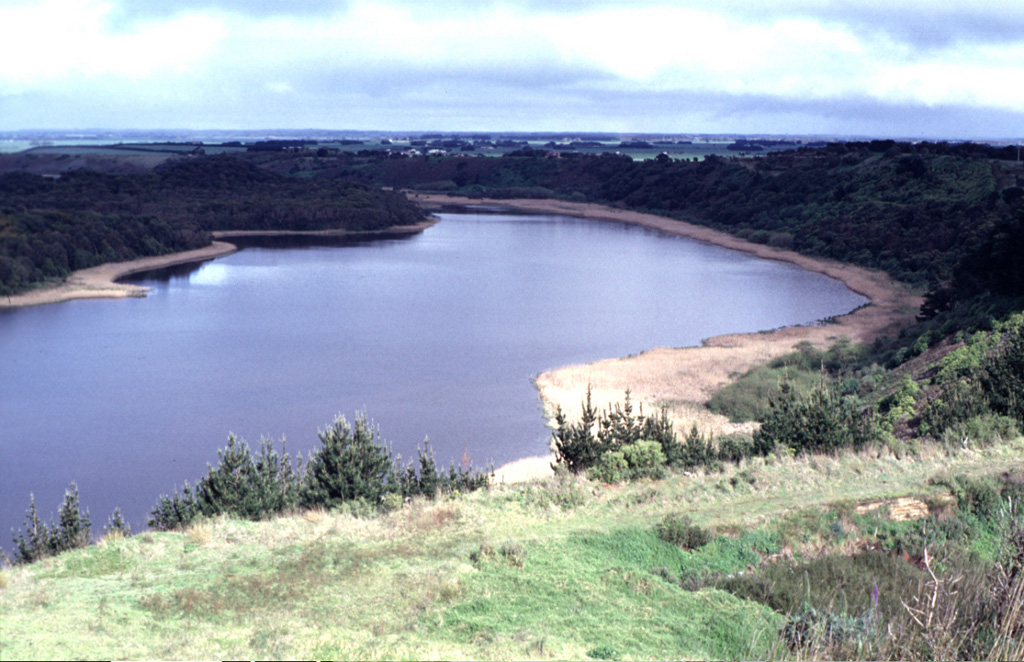
The voluminous Newer Volcanics Province covers a broad 15,000 km2 area of SE Australia with nearly 400 small shield volcanoes and explosive vents of Tertiary-to-Holocene age. Volumetrically the vast proportion of volcanic products consist of flat-lying lava flows, although the most prominent features of the volcanic field are the numerous small scoria cones, tuff rings, and maars that rise above the lava plain. Several vents were active during the Holocene; another vent (Mount Tower) is now considered to be of late-Pleistocene age. Late-Pleistocene to Holocene eruptions are characterized by small volume and low explosivity. The youngest dated eruptions took place at Mount Schank and Mount Gambier about 5,000 years ago, when explosive activity formed several maars and associated lava flows.
Historial de erupciones
4 registradasGlosarioLínea de tiempo detallada
- 2900 a. C. (±150 años)VEI ?Estimación geológica2900 a. C. – fin desconocidoMt. Gambier
- 3000 a. C. (±500 años)VEI ?Estimación geológica3000 a. C. – fin desconocidoMt. Schank
- 5290 a. C.VEI ?Estimación geológica5290 a. C. – fin desconocidoMt. Napier
- 5850 a. C.VEI ?Estimación geológica5850 a. C. – fin desconocidoRed Rock
Volcanes cercanos
Enlaces externos
⚠ Solo como referencia. No apto para respuesta ante emergencias.