México · Campo volcánico
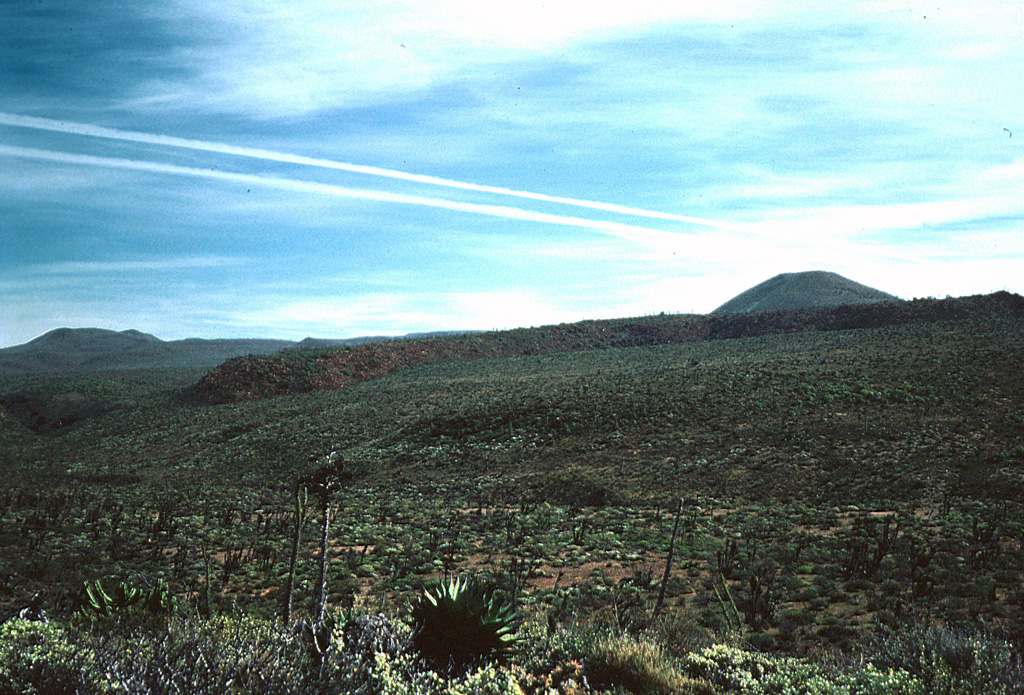
Jaraguay Volcanic Field
- Tipo
- Campo volcánico
- Altitud
- 960 m
- Última erupción
- Desconocido
- Tipo
- Campo volcánico
- País
- México
- Región
- Pacífico Oriental / Gulf of California Rift Volcanic Province
- Altitud
- 960 m
- Coordenadas
- 29.330, -114.500
- Última erupción
- Desconocido
- Contexto tectónico
- Zona de rift / Corteza continental (> 25 km)
- Forma volcánica
- Grupo volcánico
- Roca principal
- Andesita / Andesita basáltica
Resumen geológico
The Jaraguay Volcanic Field is the northernmost of a group of large young alkalic volcanic fields in Baja California. Located primarily on the Pacific Ocean side of northern Baja between Jaraguay and Arroyo San José, the field contains numerous youthful-looking cinder cones and associated basaltic and basaltic andesite lava flows. Some lava flows are less vegetated than flows of the San Quintín Volcanic Field to the north. Several lava flows were erupted near the south side of Arroyo San José at the SW end of the Jaraguay volcanic field.
Historial de erupciones
GlosarioLínea de tiempo detallada
No hay registros de erupciones disponibles.
Volcanes cercanos
Enlaces externos
- Todavía no está en Wikipedia (Español). Puede contribuir en Wikidata.
- Página original del Smithsonian GVP
⚠ Solo como referencia. No apto para respuesta ante emergencias.