Peru · Stratovolkan
Huaynaputina
- Tipe
- Stratovolkan
- Ketinggian
- 4679 m
- Letusan terakhir
- 1600
- Tipe
- Stratovolkan
- Negara
- Peru
- Wilayah
- Amerika Selatan / Central Andean Volcanic Arc
- Ketinggian
- 4679 m
- Koordinat
- -16.614, -70.854
- Letusan terakhir
- 1600
- Kondisi tektonik
- Zona subduksi / Kerak benua (> 25 km)
- Bentuk lahan
- Komposit
- Batuan utama
- Dasit
Ringkasan geologi
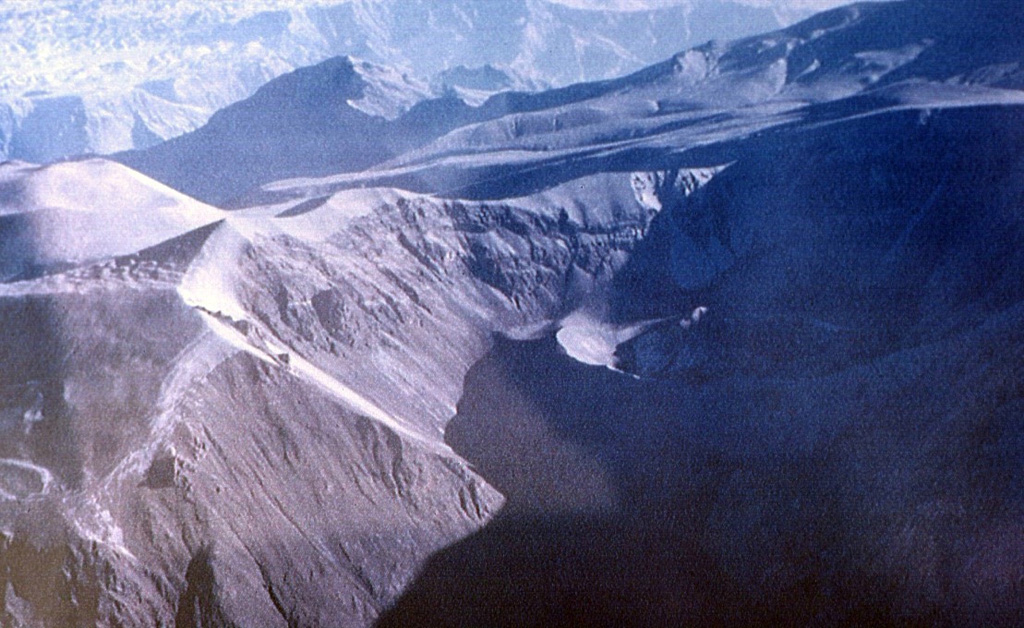
Huaynaputina (whose name means "new volcano") was the source of the largest historical eruption of South America in 1600 CE. It has no prominent topographic expression and lies within a 2.5-km-wide collapse depression and further excavated by glaciers within a Tertiary to Pleistocene edifice. Three overlapping ash cones with craters up to 100 m deep were constructed during the 1600 CE eruption on the floor of the older crater, whose outer flanks are heavily mantled by ash deposits from the 1600 eruption. This powerful fissure-fed eruption may have produced nearly 30 km3 of dacitic tephra, including pyroclastic flows and surges that traveled 13 km to the E and SE. Lahars reached the Pacific Ocean, 120 km away. The eruption caused substantial damage to the major cities of Arequipa and Moquengua.
Ringkasan Wikipedia
Ringkasan InggrisHuaynaputina is a volcano in a volcanic high plateau in southern Peru. Lying in the Central Volcanic Zone of the Andes, it was formed by the subduction of the oceanic Nazca Plate under the continental South American Plate. Huaynaputina is a large volcanic crater, which lacks an identifiable mountain profile, with an outer stratovolcano and three younger volcanic vents within an amphitheatre-shaped structure that is either a former caldera or a remnant of glacial erosion. The volcano has erupted dacitic magma.
Wikipedia · CC BY-SA · Baca artikel lengkap →
Riwayat letusan
2 tercatatGlosariumGaris waktu rinci
- 1600VEI 6Teramati1600-02-17 – 1600-03-06Summit and south flank
- 7750 SM (±200 tahun)VEI ?Perkiraan geologi7750 SM – akhir tidak diketahui
Gunung api terdekat
Tautan eksternal
⚠ Untuk referensi saja. Bukan untuk tanggap darurat.