Portugal · Rekahan erupsi
Picos Volcanic System
Picos Fissural Volcanic System
- Tipe
- Rekahan erupsi
- Ketinggian
- 350 m
- Letusan terakhir
- 1652
- Tipe
- Rekahan erupsi
- Negara
- Portugal
- Wilayah
- Samudra Atlantik / Azores-Terceira Rift Volcanic Province
- Ketinggian
- 350 m
- Koordinat
- 37.780, -25.670
- Letusan terakhir
- 1652
- Kondisi tektonik
- Zona rift / Kerak samudra (< 15 km)
- Bentuk lahan
- Gugusan gunung api
- Batuan utama
- Trakibasal / Tefrit basanit
Ringkasan geologi
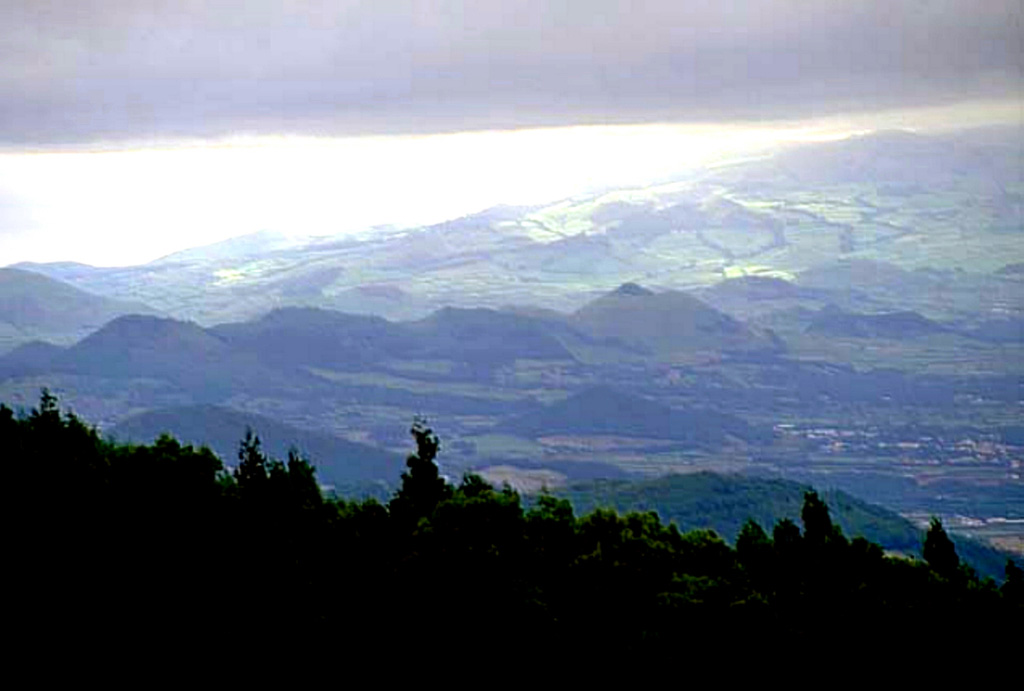
Nearly 200 scoria cones of the Picos volcanic system dot the narrow central zone of Sao Miguel Island between Sete Cidades and Agua de Pau volcanoes. This area of monogenetic fissure-controlled, dominantly basaltic volcanism, much of which post-dates the roughly 5,000-year-old Fogo eruption, cannot be assigned to either volcano and appears related to en-echelon fissures overlying a fracture zone. Thick pumice deposits thought to originate from the Picos system may have originated from vents or a caldera destroyed and now buried by young basaltic volcanism. The most noteworthy of the young vents is Serra Gorda, SE of Siete Cidades, and the cone that produced a lava delta south of Agua de Paul village. The majority of the inhabitants of Sao Miguel Island occupy both coasts below this volcanic zone. At least 18 eruptions have occurred during the past 2,800 years, although the only recorded eruption occurred in 1652 CE. The most recent activity has been basaltic; however, two more-explosive trachytic eruptions occurred during the past 1,100 years.
Ringkasan Wikipedia
Ringkasan InggrisThe Picos Volcanic Fissural System is a system of scoria cones that build up the central region of the island of São Miguel. This volcano is very young with most of it only 5000 years old. The only recorded eruption was in 1652, but seven other eruptions have taken place in the cinder cone group in the last 10,000 years.
Wikipedia · CC BY-SA · Baca artikel lengkap →
Riwayat letusan
7 tercatatGlosariumGaris waktu rinci
- 1652VEI 2Teramati1652-10-19 – 1652-10-26Eastern part (SW of Fogo 1 cone)
- 940 (±100 tahun)VEI ?Perkiraan geologi940 – akhir tidak diketahuiEastern part (Mata des Feiticeiras)
- 850 (±150 tahun)VEI ?Perkiraan geologi850 – akhir tidak diketahuiEast-central part (Cruz)
- 600 (±100 tahun)VEI ?Perkiraan geologi600 – akhir tidak diketahuiEast-central part (Caldeirao)
- 510 SM (±200 tahun)VEI ?Perkiraan geologi510 SM – akhir tidak diketahuiNorth-central part (Furna)
- 850 SM (±100 tahun)VEI ?Perkiraan geologi850 SM – akhir tidak diketahuiNorth-central part (Aflitos)
- 4040 SMVEI ?Perkiraan geologi4040 SM – akhir tidak diketahui
Gunung api terdekat
Tautan eksternal
⚠ Untuk referensi saja. Bukan untuk tanggap darurat.