Australia · Campo vulcanico
Newer Volcanics Province
- Tipo
- Campo vulcanico
- Altitudine
- 1011 m
- Ultima eruzione
- -2900
- Tipo
- Campo vulcanico
- Paese
- Australia
- Regione
- Australia orientale / Southeastern Australia Volcanic Province
- Altitudine
- 1011 m
- Coordinate
- -37.770, 142.500
- Ultima eruzione
- -2900
- Contesto tettonico
- Intraplacca / Crosta continentale (> 25 km)
- Forma vulcanica
- Gruppo vulcanico
- Roccia principale
- Trachibasalto / Tefrite basanite
Sintesi geologica
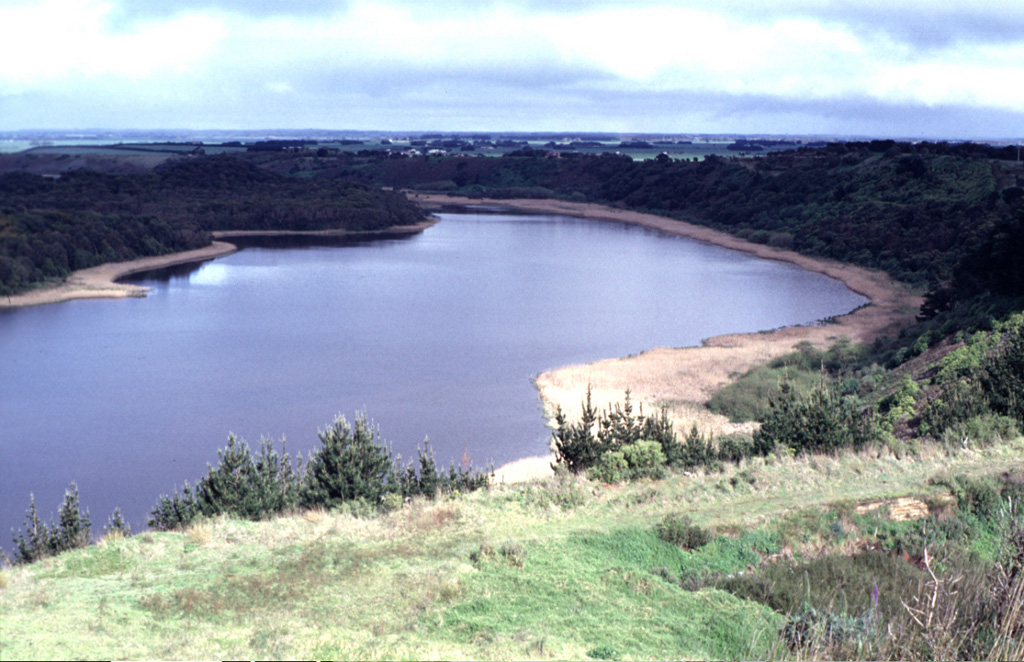
The voluminous Newer Volcanics Province covers a broad 15,000 km2 area of SE Australia with nearly 400 small shield volcanoes and explosive vents of Tertiary-to-Holocene age. Volumetrically the vast proportion of volcanic products consist of flat-lying lava flows, although the most prominent features of the volcanic field are the numerous small scoria cones, tuff rings, and maars that rise above the lava plain. Several vents were active during the Holocene; another vent (Mount Tower) is now considered to be of late-Pleistocene age. Late-Pleistocene to Holocene eruptions are characterized by small volume and low explosivity. The youngest dated eruptions took place at Mount Schank and Mount Gambier about 5,000 years ago, when explosive activity formed several maars and associated lava flows.
Storia delle eruzioni
4 registrateGlossarioCronologia dettagliata
- 2900 a.C. (±150 anni)VEI ?Stima geologica2900 a.C. – fine sconosciutaMt. Gambier
- 3000 a.C. (±500 anni)VEI ?Stima geologica3000 a.C. – fine sconosciutaMt. Schank
- 5290 a.C.VEI ?Stima geologica5290 a.C. – fine sconosciutaMt. Napier
- 5850 a.C.VEI ?Stima geologica5850 a.C. – fine sconosciutaRed Rock
Vulcani nelle vicinanze
Link esterni
⚠ Solo a scopo informativo. Non adatto a situazioni di emergenza.